Your uniform gets worn on long practical days, washed by hand in a bucket, and dried wherever there is space. So the cloth matters. This page sets out the nursing uniform fabric and colours we use, in plain terms, and how each one behaves when you look after it yourself.
Most garments are stitched in poly-cotton. Salwar and churidar sets can also be made in poly-viscose, and lab coats come in poly-cotton twill or cotton. The colour is whatever your college uniform list asks for, from our nine shades.
Which fabric goes into which garment
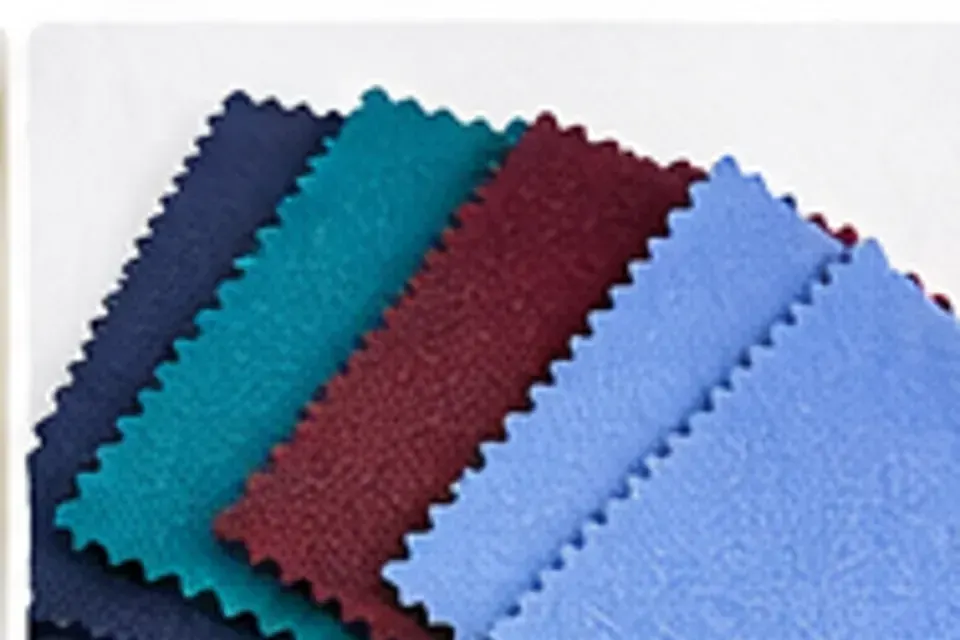
Colours we stock
- White
- Navy blue
- Sky blue
- Royal blue
- Teal
- Bottle green
- Maroon
- Grey
- Black
The cloths we stitch with
- Poly-cotton 65/35, 180–200 GSM: used for tunics, nurse dresses and scrubs. The polyester keeps it from creasing badly and helps it dry fast; the cotton keeps it comfortable on a long day. At this weight, white does not turn see-through in normal light.
- Poly-viscose: an option for salwar and churidar uniforms. It falls softly, feels smooth, and suits a dupatta or a kameez that should hang rather than stand stiff.
- Poly-cotton twill: a firmer weave for lab coats. The collar and pockets hold their shape, which matters in the lab and the practical exam hall.
- Cotton: available for lab coats and caps if you prefer a softer, more breathable feel. It creases more and needs a hotter iron.
Which cloth goes into which garment is also shown in the table above, linked to each product range.
Washing by hand in the hostel
Poly-cotton is forgiving. Soak it for a short while in cool or lukewarm water with ordinary detergent, rub the collar and cuffs gently, rinse well and squeeze, don't wring hard. Wash dark shades such as navy, maroon and black on their own for the first few washes, as some loose dye can come out.
Hard water leaves whites looking dull over time. A final rinse in plenty of clean water helps, and so does not using too much detergent, since leftover soap holds dust. Turn embroidered pieces inside out before washing so the logo thread is not scrubbed flat.
Drying indoors during the monsoon
When it rains for days, the hostel corridor becomes the drying line. Poly-cotton helps here: it holds less water than pure cotton, so it dries faster indoors. Hang tops on a hanger rather than folding them over a rope, so air gets inside, and keep a gap between pieces. A fan, even on low, makes a real difference.
Avoid drying a wet uniform folded on a chair overnight. It can smell musty by morning, and on white cloth it can leave marks. If the monsoon overlaps with your postings, a second set is worth having so you are never pulling on a damp one.
Ironing, and keeping white white
Poly-cotton needs only a medium iron, and many students just smooth it while slightly damp. Twill and cotton lab coats look sharper with a hotter iron. Iron embroidery from the reverse side.
White is the shade most colleges choose, and the one that shows everything. Wash whites only with whites, never with a navy or maroon piece. Deal with a mark the same day rather than letting it set. Dry whites in shade where possible, as strong sun can yellow them over a long time. Keep chlorine bleach off any coloured garment; it fades the shade unevenly.
We stock White, Navy blue, Sky blue, Royal blue, Teal, Bottle green, Maroon, Grey and Black. Colleges often pair them: white tunics with navy trousers, sky blue scrubs for one year and royal blue for another, or maroon for a particular course.
We stitch to the colour your college asks for, so check your uniform list before choosing. Light shades show marks sooner, while teal, bottle green, maroon and the darker blues hide the wear of a busy posting better. If your college uses a shade not in this list, ask us at the enquiry stage and we will tell you if it can be matched.
Matching shades across a batch
Dyed cloth can vary slightly from one lot to the next. That is why a class order is stitched together, from one lot, after the sample is approved. A student who orders later quotes the class or college name, and we work from the same approved sample so the shade stays as close as possible.
Questions buyers ask
Is poly-cotton comfortable in hot weather? +
Yes, for most students. The cotton part lets it breathe, and it dries quickly after a sweaty ward day. If you prefer pure cotton, ask about it for a lab coat or cap.
Will a white tunic be see-through? +
At 180–200 GSM poly-cotton, white is opaque in normal wear. If it matters to your class, check the sample in daylight before approving the batch.
Can I machine wash my uniform? +
Yes. A gentle cycle in cool or lukewarm water suits all our cloths. Wash whites separately and turn embroidered pieces inside out.
Can our class choose a colour not on the college list? +
We stitch to what your college asks for. If the college allows a choice, any of our nine shades is possible; check with the college office first.
Does the logo embroidery fade? +
Embroidery thread holds up well to normal washing. Turning the garment inside out and ironing from the back keeps it neat for longer.